I long for a meaningful conversation

One where there is room to explore my thoughts further and that exploration is given the time and attention it deserves. One where that exploration segues into the other’s thoughts and ideas and the focus naturally shifts to them. A meaningful conversation that creates a connection between us. 

The last time I recall having conversations like this is in college with my mentor. That was nearly ten years ago. I am glad she showed me what was possible. Since then I have found a person with genuine interest in what I have to say is rare. I know they are out there, I have met them. I should try harder at making friendships from those once or twice encounters. 

The more typical conversation I find exhausting, for it feels like two people playing a game of one-upmanship, volleying their story, experience, and idea across the table. There is no time or care taken to really listen and be curious, just time enough to think of a comeback… “Oh, you like that? I like this.”, “That sounds wonderful. This other wonderful thing happened to me.”, “I’m sorry you had that awful experience. I experienced something similar… it might even be worse.” and on and on it goes. 

I must admit I am guilty of conversing this way recently. I do it to engage with the other person and to be assertive. In the moment it feels exciting and empowering to throw my thought across the table just as I receive theirs, but I walk away exhausted and lonely. 

I might stop returning the volley and go back to just listening, to give others the gift of being heard, and wait for the rare person to return the favor and give us the gift of connection. 

Noma 2.0

Earlier this month, I traveled to Copenhagen, a city built on canals that has retained its beauty and enterprise.

One highlight of Copenhagen was lunch at Noma 2.0. My friend who was showing me around Copenhagen made the reservation a full three months in advance. Her enthusiasm had been slowly growing on me. That and the anticipatory and artistic youtube videos.

Chef Rene Redzepi’s idea for Noma is to prepare meals around the seasons based on ingredients harvested from the Nordic region. Gathered may be a better descriptor. As in ‘hunted and gathered.’ We were lucky enough to catch the last week of Noma’s seafood menu (see list at the end of this blog). A fourteen course and three hour meal filled with flavors and textures I have never experienced before and likely never will again.

Due to all the exotic dishes I saw in the videos, I was nervous going into the meal that I would be unsure which utensils to use and what to eat and what not to! Thankfully, each dish was presented by the cook who prepared the meal, with instructions on how to enjoy it.

The space the Noma crew has created is truly breathtaking. It is open air; filled with natural light. Everything speaks closeness to nature.

Noma was a once in a lifetime gastronomic experience – the flavors, the textures, the variety and the unfamiliarity.

At the end of this journey, my friend (shout-out to Batzul) was forward enough to ask for a photo with Rene. Batzul was quick to point out we were from Mongolia. And Rene, in turn, was quick to acknowledge our unique cooking and eating traditions, including our multitude of dairy products and… bloodtapping! I did not know bloodtapping was a tradition in Mongolia. To be taught about my history by a Dane – that is truly something else. I am still gathering information on this, but apparently riders on long journeys (messengers, warriors, etc.) would tap into the artery of their horse and drink the blood for nutrition and energy. The horse probably suffered, but remained alive. I wonder if this is still practiced today, considering how many Mongolians still herd livestock? I wonder how Rene learned of this tradition? So many questions.

This goes to show there is always more to learn. And Rene definitely earned my respect as a chef for knowing more about Mongolian eating tradition than I. His passion as a chef really showed.

Thanks, Batzul, for the invitation and experience.

And here is the only photo I took at Noma – of plankton juice.

IMG_1566

Noma Seafood Menu

  • sea snail broth
  • razor clams
  • best of the mussel
  • dried fruits and shrimps
  • cured trout roe and eggs
  • jellyfish
  • seafood platter (scallop, mahogany clam, limfjords oyster, sea urchin, dried sea cucumber)
  • squid in seaweed butter
  • sea snails and roses
  • head of the cod
  • pear and roasted kelp ice cream
  • cloudberries and pine cones
  • sugar kelp tart
  • plankton cake

Juice pairing

  • green gooseberry
  • saffron and arctic thyme
  • cloudberry
  • pumpkin seed and plankton
  • smoked octopus and aronia
  • tomato and fig leaf

‘The Road to Wigan Pier’ by George Orwell

I highly recommend that everyone read this brilliant book!

Over the last year, I’ve been getting to know George Orwell and his works, as they relate to his time and ours. We all know the prophetic nature of Animal Farm and 1984. Similarly, there was a lot to take away from ‘The Road to Wigan Pier’, an earlier work written in the 1930s between The Great War and the beginning of WWII.

The goal of this book was for Orwell to experience and report on how the poorest working-class Englishmen and women, mostly coal miners, lived in the 1930s. He observed the physical, economic, and psychological hardships they live through day in, day out… A poor diet of tinned meat and sweet candies is one example; and a condition that can still be observed today among the poor. He also astutely observed ‘several million men in England will – unless another war breaks out – never have a real job this side of the grave.’ Saddening that an economic boom is seen as a positive outcome of war… is there such a thing as a ‘positive’ outcome of war? (I grant that defeating Nazis was a positive outcome, but just wish that it had never gotten to that.) Also saddening to realize the military industrial complex continues to lobby governments to keep war going for their profits.

I never imagined Orwell could be wrong in his prophecies. But in ‘Road to Wigan Pier’, he perceived the logical end state of Socialism to be a great, efficient machinery (though to his dislike) and that capitalism as an impediment to innovation. However, with history now unfolded, we know Mao and Pol Pot drove people from the cities and forced them to work fields with barely any tools; whereas the free market has driven innovation as ‘an efficient machinery’. Orwell’s idea of Socialism at this time differed from how it played out in reality. He seems to have realised this later on, leading to his famous novels ‘Animal Farm’ and ‘1984’. (He corrected his prophecy after all!)

Why he disliked the idea of an efficient machinery (regardless of whether it sprung from Socialism or Capitalism) is neatly summed up in these two passages: “…For a man is not, as the vulgarer hedonists seem to suppose, a kind of walking stomach; he has also got a hand, an eye and a brain. Cease to use your hands, and you have lopped off a huge chunk of your consciousness… Mechanise the world as fully as it might be mechanised, and whichever way you turn there will be some machine cutting you off from the chance of working – that is, of living.” Oh how true, even today!

‘Conservatism’ in the U.S.

Reflecting on a New Yorker article on Leonard Leo, Executive Vice President of the Federalist Society in the U.S., following the recent confirmation of Neil Gorsuch to the U.S. Supreme Court. Leo is the man behind Trump’s (in)famous list of candidates advertised during the last weeks of his campaign, while the Republican majority Senate was busy ignoring the nomination of Merrick Garland’s. As the New Yorker article states: “Leonard Leo is now responsible for a third of the Supreme Court.” John Roberts, Samuel Alito, and now Neil Gorsuch.

You see the trend… Leo has successfully deployed three ‘conservative’ justices to the Supreme Court. Leo is quoted asking, “What’s the best way to preserve the dignity and worth of the human person?”, and answering, “You assure all that freedom by establishing limitations on the power of the state.”

I want to ask Leo and all other conservatives who share his definition of “conservatism”, is freedom obtained by limiting the power of the state, only? What about the power of the church? Is freedom obtained by foregoing state-enforced laws and replacing them by church/society-enforced religious laws? Is that really freedom?

Humanities

Along with various career preparations for a life of doing and achieving, the humanities invite explorations in discovery and self, probing questions of being and meaning to season in that knowledge of oneself which is insight, in that awareness of one another which is understanding, in those graces of personality and strengths of character which belong to true education.

~Dr. Lawrence F. Small, Jr.

A Week on Concord and Merrimack Rivers

… The movements of the eyes express the perpetual and unconscious courtesy of the parties. It is said that a rogue does not look you in the face, neither does an honest man look at you as if he had his reputation to establish. I have seen some who did not know when to turn aside their eyes in meeting yours. A truly and magnanimous spirit is wiser than to contend for the mastery in such encounters. Serpents alone conquer by the steadiness of their gaze. My friend looks me in the face and sees me, that is all…

~Henry David Thoreau

A Week on the Concord and Merrimack Rivers

…You shall see rude and sturdy, experienced and wise men, keeping their castles, or teaming up their summer’s wood, or chopping alone in the woods, men fuller of talk and rare adventure in the sun and wind and rain, than a chestnut is of meat; who were out not only in 1775 and 1812, but have been out every day of their lives; greater men than Homer, or Chaucer, or Shakespeare, only they never got time to say so; they never took the way of writing. Look at their fields, and imagine what they might write, if ever they should put pen to paper. Or what they have not written on the face of the earth already, clearing, and burning, and scratching, and harrowing, and plowing, and subsoiling, in and in, and out and out, and over and over, again and again, erasing what they had already written for want of parchment…

~Henry David Thoreau

Bob Marley

Only once in your life, I truly believe, you find someone who can completely turn your world around. You can tell them things you’ve never shared with another soul and they absorb everything you say and actually want to hear more. You share hopes for the future, dreams that will never come true, goals that were never achieved and the many disappointments life has thrown at you. When something wonderful happens, you can’t wait to tell them about it, knowing they will share in your excitement. They are not embarrassed to cry with you when you are hurting or laugh with you when you make a fool of yourself. Never do they hurt your feelings or make you feel like you are not good enough but rather they build you up and show you the things about yourself that make you special and even beautiful. There is never any pressure, jealousy or competition but only a quiet calmness when they are around. You can be yourself and not worry about what they will think of you because they love you for who you are. The things that seem insignificant to most people such as a note, song or walk become significant treasures kept safe in your heart to cherish forever. Memories of your childhood come back and are so clear and vivid it’s like being young again. Colours seem brighter and more brilliant. Laughter seems part of daily life where before it was infrequent or didn’t exist at all. A phone call or two during the day helps to get you through a long day’s work and always brings a smile to your face. In their presence, there’s no need for continuous conversation, but you’re quite content in just having them nearby. Things that never interested you before become fascinating because you know they are important to this person who is special to you. You think of this person on every occasion and in everything you do. Simple things bring them to mind like a pale blue sky, gentle wind or even a storm cloud on the horizon. You open your heart knowing that there’s a chance it may be broken one day and in opening your heart, you experience a love and joy you never dreamed possible. You find that being vulnerable is the only way to allow your heart to feel true pleasure that’s so real it scares you. You find strength in knowing you have a true friend and possibly a soul mate who will remain loyal to the end. Life seems completely different, exciting and worthwhile. Your only hope and security is in knowing that they are a part of your life.


~Bob Marley

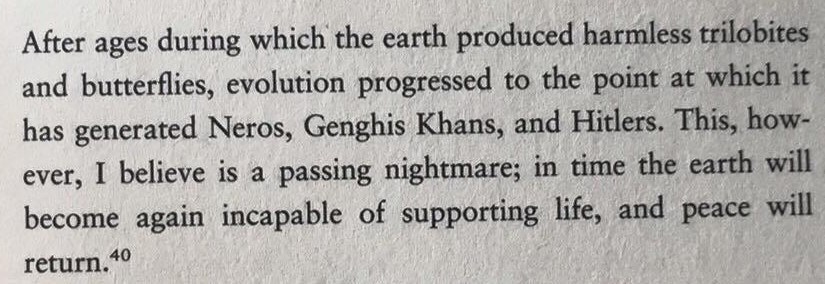
A Passing Nightmare

Muslim Lecturer on the Siege of Baghdad

About a month ago, I came across this video of a Muslim lecturer speaking on the Siege of Baghdad of 1258 at an event that seems to be called “Changing the World through Dawah” (link above). I encourage you to watch the video before reading my post.

Since then I have been thinking about and questioning the historical facts presented by the lecturer and his “between-the-lines” message. Unfortunately, I have not been able to find the original source, the full lecture, the lecturer’s background, nor the nature of the event (but I have a guess).  If you are so resourceful as to find them, I praise you, and please let me know.

The barbarism of Mongol soldiers depicted by the lecturer is no surprise to me. We, modern-day Mongolians, are taught about this barbarism from an early age. I suspect this is so, because the available historic texts were all written by Chinese scholars or Western merchants. So there is little room for bias to delude us from our historically barbaric nature. The Khan would send a messenger to a city offering the ruler to peacefully concede to Mongol rule or refuse and taste the wrath of Mongols. The Abbasid Caliph Al-Musta’sim refused to acquiesce to the demands Munkh Khan, ruler of the Mongol Empire at the time, and sent the messenger’s head back to the Mongols. Naturally, Munkh Khan ordered Khulegu Khan to subjugate the Abbasid Caliphate and its capital in Baghdad. One of Munkh Khan’s demand was of course for the Caliphate to pay an annual tribute to the Ilkhanate (resources were important then too). To siege a city because they refused to submit to your rule and pay an annual tribute is undoubtedly insane by current moral standards. Physical warfare and violence were more commonplace back then. So I do not dispute every Mongol soldier killed at least a dozen of the Caliphate soldiers and residents. (I did find it surprising 1) women and children were killed; in most other attacks, women and children who were shorter than an ox cart wheel were spared; and 2) a woman was part of the Mongol army. I will have to consult Google on these two points soon.) Perhaps we were particularly cruel in the Siege of Baghdad, because of the repeated resistance from the Abbasid Caliphate and their neighbours.

What I did find debatable is the lecturer’s intended message. When I first watched this lecture, it seemed evident he is saying the Mongol Empire targeted and was particularly cruel to the Abbasid Caliphate, because they were Muslims. I got this impression, because he highlights the word “Muslim” each time he says it. Reader, please let me know if this was not your first impression. I wanted to write this post to note the Mongols were equally barbaric in their attacks of China, Russia, Europe, and the Middle East. The Siege of Baghdad went to the violent extent that it did, because the Caliph refused to give in after several battles and continued to defy Khulegu Khan. Had another king, prince, or ruler put up such resistance in the face of the Ilkhanate, they too would have gotten a taste of our barbarism. One positive aspect of the Mongol Empire was that we welcomed all religions (so long as the people agreed to be subjected to Mongol rule). In fact, Khulegu Khan later converted to Islam and was buried in modern day Iran.

After a month of pondering, I wonder if the lecturer identifies as a Muslim so strongly as to not refer to the victims of our barbarism as the Abbasids or the Middle Easterners or any other non-religious identity. And not being religious, I do not understand identifying with a religion as strongly as this lecturer does. I’m not sure I ever want to.

Needless to say, it is saddening Mongols destroyed all Baghdadi libraries, including the House of Wisdom, and with them all scientific knowledge Muslims had gathered from across the world. It is disturbing this siege was a strong contributing factor in ending the Islamic Golden Age. It is disconcerting to see my ancestor listed alongside Nero and Hitler by Bertrand Russell.